
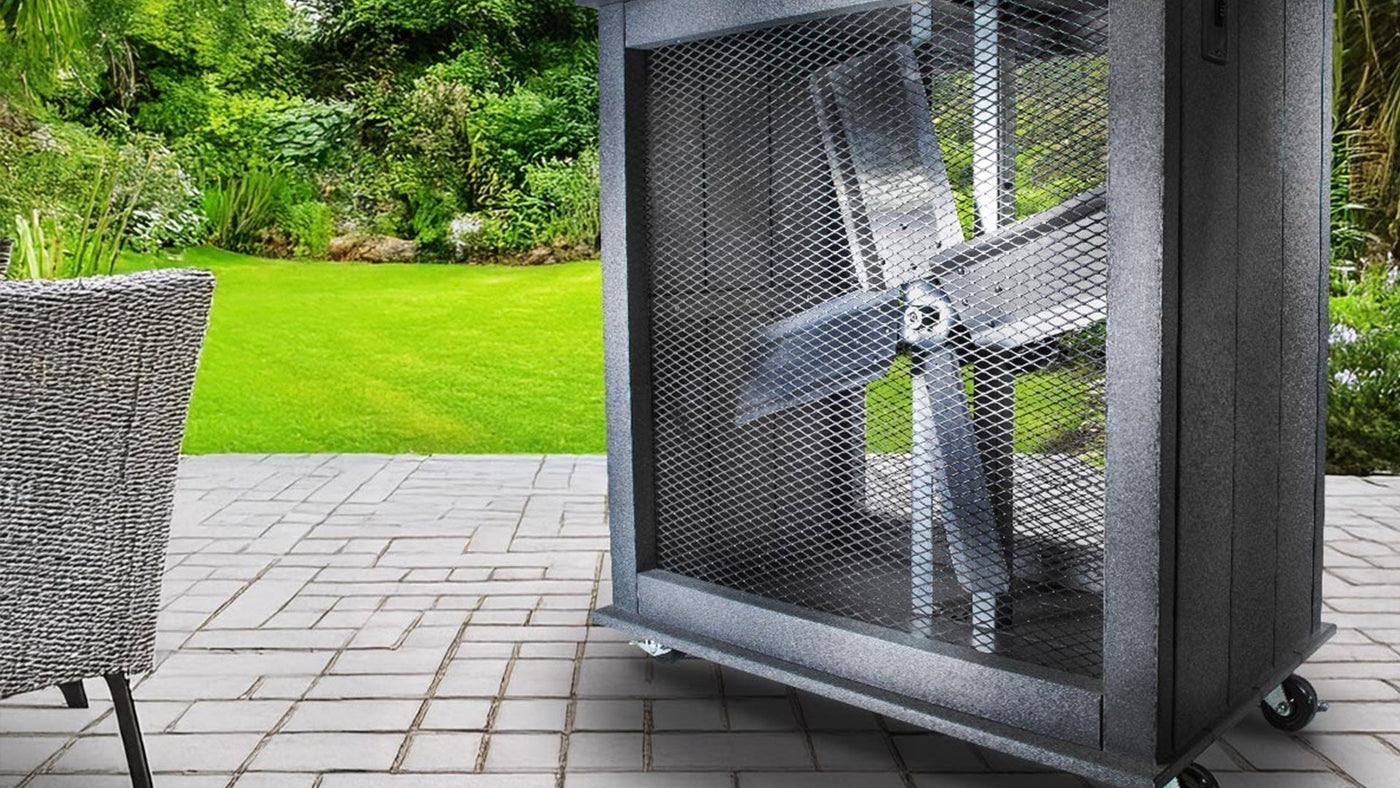
A fan that performs well in a finished living room may struggle to last a single summer on a patio. A fan built for a clean office environment may not handle the dust and debris of a barn or workshop. Where a fan is used has a major impact on how long it lasts, how safely it operates, and how well it holds up over time.
Environment and durability are two of the most important factors to consider when choosing a fan, especially for garages, patios, workshops, barns, warehouses, and other demanding spaces.

Indoor vs Outdoor Fans
Indoor and outdoor fans may look similar at first glance, but they are built differently.
Indoor fans are designed for dry, climate-controlled spaces. Their motors, bearings, finishes, and electrical components are typically not built to handle moisture, dust, salt air, or temperature swings.
Outdoor fans are built to handle exposure. They use rust-resistant materials, sealed motors, weatherproof housings, and protective coatings that allow them to perform reliably in humid, wet, or dirty conditions.
Using the wrong fan in the wrong environment is one of the most common buying mistakes. An indoor fan installed on a covered patio may rust out within a season. An undersized outdoor fan in a damp barn may seize up from corrosion before its second summer.

Understanding Fan Ratings: Dry, Damp, and Wet
Most ceiling fans and many outdoor fans are rated for one of three environments: dry, damp, or wet. These ratings come from Underwriters Laboratories (UL) and they tell you exactly where a fan is safe to use.
|
Rating |
Where It Can Be Used |
Common Spaces |
|---|---|---|
|
Dry |
Indoor spaces with no moisture exposure |
Bedrooms, living rooms, finished basements |
|
Damp |
Covered or sheltered areas with humidity but no direct water |
Covered patios, screened porches, sunrooms, bathrooms |
|
Wet |
Areas exposed to direct rain, snow, or water |
Open patios, gazebos, pergolas, near pools |
The damp rated vs wet rated distinction is the single most important decision when buying an outdoor fan, because installing the wrong type leads to either premature failure or unnecessary cost.
A dry-rated fan should never be installed on a covered patio, even if it looks dry most of the year. Humidity, condensation, and the occasional gust of rain can damage internal components over time.

What Does Damp Rated Mean?
A damp rated fan is built to handle moisture in the air, but not direct contact with water. Damp rated fans are sealed against humidity, condensation, and steam, but they are not designed to be rained on.
Damp rated fans are a good fit for:
- Covered patios
- Screened-in porches
- Sunrooms and three-season rooms
- Bathrooms
- Garages with regular humidity
A damp rated patio fan typically uses sealed motor housing, rust-resistant hardware, and moisture-tolerant blade materials, but the fan body should still be protected from direct rain.
If a fan can occasionally be splashed or rained on, even lightly, a damp rating is not enough. A wet rating is required.
What Does Wet Rated Mean?
A wet rated fan is built for direct water contact. These fans use fully sealed motors, weather-resistant blades (often ABS plastic or stainless steel), and corrosion-resistant hardware that can stand up to rain, snow, sprinklers, and high humidity.
A wet rated ceiling fan is the only safe choice for fully exposed outdoor installations, and any weatherproof fan rated for direct water contact must carry a UL wet location listing to be code-compliant.
Wet rated fans are required for:
- Open patios
- Pergolas without solid roofs
- Gazebos
- Pool areas
- Outdoor kitchens and bar areas
- Any space where the fan may get rained on
Even if a space is mostly shaded, an open patio with a partial roof typically requires a wet rated fan to remain safe and reliable over time.
Can You Use an Outdoor Ceiling Fan Indoors?
Yes. An outdoor ceiling fan can be safely used indoors. The motors, finishes, and materials used in outdoor fans are simply more durable than what is needed for indoor use.
The main consideration is appearance. Outdoor fans often use heavier blades and more industrial finishes than indoor decorative fans, which may not match the style of a finished living room.
For garages, workshops, and basements, outdoor-rated fans are often a great choice because they handle dust, humidity, and temperature swings far better than typical indoor models.
Can You Use an Indoor Fan Outdoors?
No. Indoor fans should not be used outdoors, even on covered patios. Indoor fans are not sealed against moisture and can fail quickly in humid environments.
Common problems include:
- Rust on motor components
- Corroded electrical connections
- Warped or damaged blades
- Motor seizure from moisture buildup
- Voided warranties
- Potential safety hazards if water reaches electrical components
The short rule: use dry-rated fans only indoors, damp-rated fans for covered outdoor spaces, and wet-rated fans for exposed outdoor spaces.
Are Outdoor Fans Waterproof?
Outdoor fans are water-resistant but not fully waterproof in the submersible sense. The proper term for outdoor fan water protection is the UL wet location rating, which means the fan is built to handle direct rain, snow, sprinklers, and high humidity without electrical risk or mechanical failure. A wet location certified, or rated, ceiling fan can get wet during normal weather without damage, but it should not be submerged or exposed to pressure-washing. A damp rated fan can handle humidity and condensation but should not be exposed to direct water. ENERGY STAR certified ceiling fans for outdoor use must meet the same UL location ratings as non-certified fans, so always verify the UL rating on the product label before installation.
Do You Need a Special Ceiling Fan for Outdoor Use?
Yes, outdoor spaces require a special ceiling fan rated for the moisture level the fan will face. A standard indoor (dry rated) ceiling fan will fail quickly in outdoor conditions because its motor, electrical connections, and finish are not built to resist humidity, condensation, or water exposure. For covered outdoor spaces with no direct water exposure, a damp rated ceiling fan is required. For open patios, pergolas, or any area where the fan may get rained on, a wet rated ceiling fan is required. Outdoor wall mount fans follow the same logic: dry-rated wall mount fans should never be installed in covered patios or outdoor work areas where moisture is present.
What Is the Best Ceiling Fan for an Outdoor Patio?
The best ceiling fan for an outdoor patio depends on whether the patio is fully covered, partially covered, or open. A fully covered patio with solid roofing and walls can use a damp rated ceiling fan with weather-resistant blade material. A partially covered or open patio requires a wet rated outdoor ceiling fan with fully sealed motor housing and corrosion-resistant hardware. For coastal patios, look for stainless steel or epoxy-coated components to handle salt air. Blade size should match the patio: 44 to 52 inches for small patios, 52 to 60 inches for medium covered patios, and 60+ inches for large or partially open outdoor living spaces.
Built for Tough Environments: Industrial Durability
Garages, workshops, barns, warehouses, and commercial facilities place a different kind of demand on fans. These spaces may not always be wet, but they are often hot, dusty, dirty, or full of fumes. The right fan needs to keep running through it all.
An industrial grade fan or heavy duty fan is built differently than a standard residential fan, with construction features specifically designed for continuous use in harsh conditions.
Several construction features separate industrial-grade fans from standard residential fans.
Totally Enclosed Motors
In barns, workshops, and shops, airborne dust and debris are the leading cause of fan failure. Open motors pull in particles along with air, which clogs windings and shortens motor life dramatically.
Totally enclosed motors, sometimes called TEAO or totally enclosed air-over motors, are sealed against dust ingress while still using outside air to stay cool. Heavy-duty wall-mount fans and industrial exhaust fans typically use totally enclosed motors specifically because open-motor fans tend to fail quickly in barns, greenhouses, and warehouses.
Powder-Coated and Galvanized Steel
Painted finishes scratch and chip, which leads to rust over time. Powder-coated steel is baked on at high temperatures, producing a finish that resists chipping, scratching, and corrosion.
Galvanized steel adds another layer of protection by coating the metal with zinc, which slows rust even in humid or salt-air conditions. Galvanized housings are often used on industrial exhaust fans where the fan body is exposed to moisture on both sides.
OSHA-Compliant Grilles
In commercial and industrial settings, fan guards must meet OSHA safety standards. These grilles have spacing tight enough to prevent finger and tool contact with the blades, protecting workers and reducing liability for facility owners.
If a fan is being used in a workplace, an OSHA-compliant grille is not optional.
Industrial Grade Housings
Lightweight plastic housings are common on consumer-grade fans because they are inexpensive. However, lightweight plastic becomes brittle in heat and UV exposure and can crack over time.
Heavy-gauge steel housings and industrial grade plastic housings such as polyethylene hold up to repeated transport, accidental impacts, and long-term outdoor use. They are heavier and more expensive, but they last for many more years.
|
Feature |
Consumer-Grade |
Industrial-Grade |
|---|---|---|
|
Motor |
Open frame |
Totally enclosed or open frame |
|
Housing |
Lightweight plastic |
Powder-coated or galvanized steel/Polyethylene |
|
Grille |
Standard wire |
OSHA-compliant safety grille |
|
Blades |
Plastic |
Metal or reinforced |
|
Typical Lifespan |
2–5 years |
10+ years |
Corrosion Resistance for Outdoor and Coastal Environments
Coastal facilities, marinas, and outdoor commercial sites need extra protection beyond standard industrial fans. Salt air accelerates corrosion on even powder-coated steel, so fans installed near the ocean or in salt-air environments should use corrosion-resistant components like stainless hardware and sealed motor housings.
An outdoor wall mount fan installed in coastal or marine environments typically combines IP-rated motors, GFCI-equipped plugs, rust-resistant powder-coated metal construction, and weather-resistant blades suitable for patios, walkways, and exposed worksites.
Hot, Cold, and Seasonal Considerations
Temperature also affects fan durability.
Motors run hotter in summer heat, especially in attics, garages, and warehouses. Fans with thermal overload protection automatically shut down if the motor reaches an unsafe temperature, then restart once it cools. This feature can prevent motor burnout in extreme conditions.
In cold environments, lubricants in low-quality motors can thicken and cause hard starts. Industrial-grade motors are typically built with bearings and lubricants rated for a wider temperature range.
If a fan will be used year-round in a garage, barn, or warehouse without climate control, look for one rated to operate across a wide temperature range.
Common Environment Mistakes
A few common mistakes lead to most fan failures in tough environments:
- Installing dry-rated fans on covered patios
- Using indoor fans in damp garages or barns
- Choosing lightweight plastic housings for outdoor or industrial spaces
- Skipping OSHA-compliant grilles in commercial use
- Underestimating dust exposure in workshops and barns
- Using residential-grade fans in coastal or washdown environments
Most of these mistakes come down to buying based on price rather than matching the fan to the environment.
Match the Fan to the Environment
The right fan is not just about size and airflow. It is about how well the fan is built for the space it will live in.
A bedroom fan does not need to handle dust, humidity, or temperature swings. A patio fan does. A workshop fan does. A warehouse fan does. The construction differences are what determine whether a fan lasts two summers or twenty.