
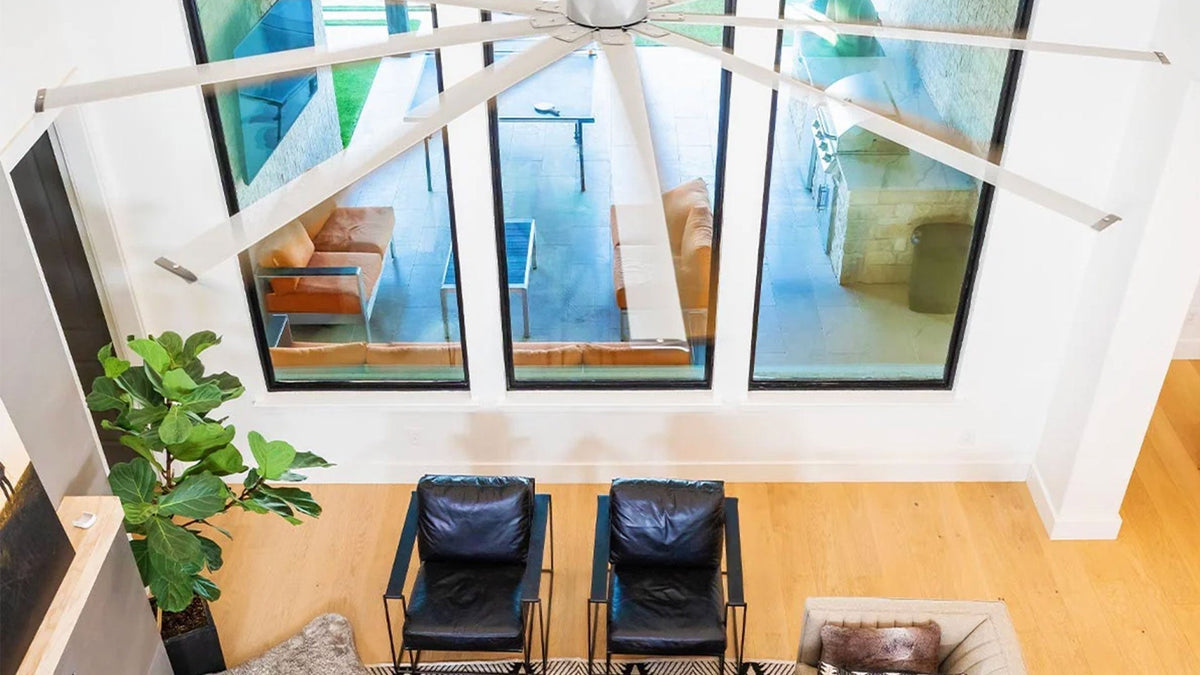
Whether you are cooling a garage, improving airflow in a warehouse, or making a patio more comfortable during the summer, ventilation has a major impact on how a space feels and functions. Understanding why ventilation is important is the first step toward making any space healthier and more efficient. Poor airflow affects comfort, energy bills, humidity, and air quality in ways that often go unnoticed until real problems develop.
Good airflow is about more than comfort. Proper ventilation can help reduce heat buildup, remove stale air, control moisture, improve energy efficiency, and make spaces more usable throughout the year. Inadequate ventilation can also raise concentrations of indoor air pollutants, according to the EPA, while poor ventilation can create hot spots, trap humidity, increase odors, and make people less comfortable in both residential and commercial environments.
For homeowners, good home ventilation can make a garage easier to work in, a patio more enjoyable, or a workshop more comfortable during the summer. For contractors, facility managers, and business owners, proper airflow can improve working conditions, reduce wear on equipment, and create a better experience for employees and customers.

Why Proper Ventilation Is Important
Air naturally becomes trapped in enclosed or partially enclosed spaces. Heat rises, moisture lingers, and stale air can build up over time. Without enough circulation, the air in a room may feel warmer, heavier, and less comfortable even if the actual temperature has not changed significantly.
Moving air creates a cooling effect because it helps evaporate moisture from the skin and prevents hot air from sitting still. This is why a fan can make a room feel several degrees cooler, even though it is not technically lowering the air temperature.
Ventilation also helps:
- Reduce heat buildup
- Control moisture and humidity
- Remove stale or stagnant air
- Improve comfort
- Reduce odors
- Improve airflow reach in large spaces
- Support more efficient heating and cooling
What Is the Importance of Proper Ventilation?
Proper ventilation is important because it directly affects comfort, energy efficiency, and indoor air quality. Without enough air exchange, heat, humidity, odors, and pollutants build up indoors, making spaces feel stuffy, warm, and uncomfortable. Good ventilation removes those issues and brings in fresh air, which is why ventilation is one of the most overlooked yet highest-impact factors in any indoor space. The ASHRAE Standard 62.2 for residential ventilation recommends a minimum of 0.35 air changes per hour to maintain acceptable indoor air quality.

Common Poor Ventilation Problems
Poor ventilation can create a wide range of problems in homes, garages, workshops, barns, warehouses, restaurants, gyms, and other commercial spaces.
Heat Buildup
One of the most common ventilation problems is trapped heat. Garages, workshops, warehouses, and barns often become significantly hotter than the outside air because heat gets trapped inside the structure.
Metal roofs, direct sunlight, machinery, and poor circulation can all make the problem worse. Even covered patios and outdoor seating areas can become uncomfortable if air is not moving.
Without airflow, these spaces can feel stuffy, uncomfortable, and difficult to use during warmer months.

Moisture and Humidity
Moisture is another major issue, especially in enclosed spaces like garages, barns, sheds, basements, and workshops.
When humid air becomes trapped, it can lead to:
- Condensation
- Mold and mildew
- Musty odors
- Rust and corrosion
- Damage to stored items, tools, or equipment
Proper ventilation helps remove damp air and replace it with fresh air, reducing the risk of moisture-related problems over time.
Can Ventilation Reduce Humidity?
Yes, ventilation is one of the most effective ways to reduce humidity indoors. When humid air is allowed to sit, it can lead to mold, mildew, condensation, and rust. The EPA recommends keeping indoor relative humidity between 30 and 50 percent to discourage mold and mildew growth, which makes good ventilation one of the simplest and most effective tools for moisture control. Mechanical ventilation like exhaust fans, attic vents, and whole-house fans helps remove damp air and replace it with drier outdoor air. Improved natural ventilation through open windows or cross-flow can also lower humidity levels significantly, especially in bathrooms, kitchens, basements, and laundry rooms.
Stale Air and Odors
Stale air often collects dust, odors, fumes, and humidity, especially in spaces like garages, gyms, workshops, warehouses, restaurants, and auto shops. Ventilation helps remove these pollutants and keeps the space feeling fresher and more comfortable.
Higher Energy Costs
Poor airflow can make heating and cooling systems work harder than necessary. When hot air becomes trapped near ceilings or in enclosed spaces, air conditioning systems often need to run longer to maintain comfortable temperatures.
Improving air circulation can help make existing HVAC systems more effective by moving air more evenly throughout a room or building.
Can Ventilation Help Lower Energy Bills?
Yes, proper ventilation can help lower energy bills by reducing the workload on heating and cooling systems. According to the U.S. Department of Energy, using a ceiling fan allows you to raise the thermostat setting by about 4°F without reducing comfort. When hot air gets trapped near ceilings or in attic spaces, air conditioners often have to run longer to maintain comfortable temperatures. Adding ceiling fans, attic exhaust fans, or whole-house fans can move air more efficiently, reduce HVAC run time, and lower monthly utility costs. This is especially noticeable during summer months and in homes with multiple stories or vaulted ceilings.
Ventilation and Comfort
Ventilation does not just affect temperature. It changes how a space feels.
For example, a garage with moving air may feel dramatically more comfortable than a garage with stagnant air, even if both spaces are technically the same temperature. The same is true for patios, warehouses, workshops, and gyms.
Air movement can make people feel cooler, reduce stickiness caused by humidity, and create a more pleasant environment overall. For homeowners, improving house ventilation is one of the most impactful and lowest-cost comfort upgrades available, often delivering noticeable results without touching the HVAC system.
Different spaces have different airflow needs:
- Garages and workshops often need strong circulation to reduce heat buildup
- Patios need airflow that feels comfortable without being too harsh
- Warehouses may need a combination of circulation and exhaust airflow
- Barns often need ventilation to control moisture and heat
- Restaurants and gyms need airflow that improves comfort without creating too much noise
The right ventilation strategy depends on the size of the space, how it is used, and what type of problem needs to be solved.
|
Space Type |
Primary Ventilation Need |
|---|---|
|
Garage |
Reduce trapped heat |
|
Workshop |
Improve circulation and comfort |
|
Patio |
Gentle airflow and comfort |
|
Warehouse |
Large-scale airflow coverage |
|
Barn |
Moisture and heat control |
|
Gym |
Fresh air and reduced stuffiness |
Ventilation Matters in Every Season
Many people think about fans only during the summer, but airflow can help year-round.
During the summer, ventilation can reduce heat buildup and improve comfort. During colder months, some fans can help redistribute warm air that rises toward the ceiling, making spaces feel more balanced and efficient.
This can be especially helpful in garages, workshops, barns, and large commercial spaces with tall ceilings.
What Happens if a Room Has No Ventilation?
If a room has no ventilation, stale air, heat, humidity, odors, and pollutants gradually build up over time. Even rooms that feel fine for short periods can develop discomfort, mold and mildew growth, higher energy costs, and poor indoor air quality without adequate airflow.
Choosing the right ventilation solution starts with understanding the problem you are trying to solve. Are you trying to cool down a garage? Reduce moisture in a barn? Improve comfort on a patio? Remove stale air from a workshop? Make a warehouse more comfortable for employees?
The answer will help determine what type of airflow is needed and what type of fan or ventilation product makes the most sense.
Good ventilation is not about making air colder. It is about making a space feel better, function better, and stay more comfortable over time.
Benefits of Ventilation at a Glance
The benefits of ventilation extend far beyond comfort. Good ventilation:
- Reduces heat buildup in attics, garages, and upper floors
- Removes stale air, dust, smoke, and indoor pollutants
- Controls humidity and helps prevent mold and mildew
- Lowers heating and cooling costs by reducing HVAC strain
- Improves indoor air quality and reduces respiratory irritation
- Extends the life of stored tools, equipment, and inventory by reducing moisture damage
- Makes garages, workshops, patios, and barns more usable year-round
- Helps redistribute warm air during winter for more even temperatures
A well-ventilated space is not just more comfortable. It is healthier, more efficient, and easier to maintain over time.