
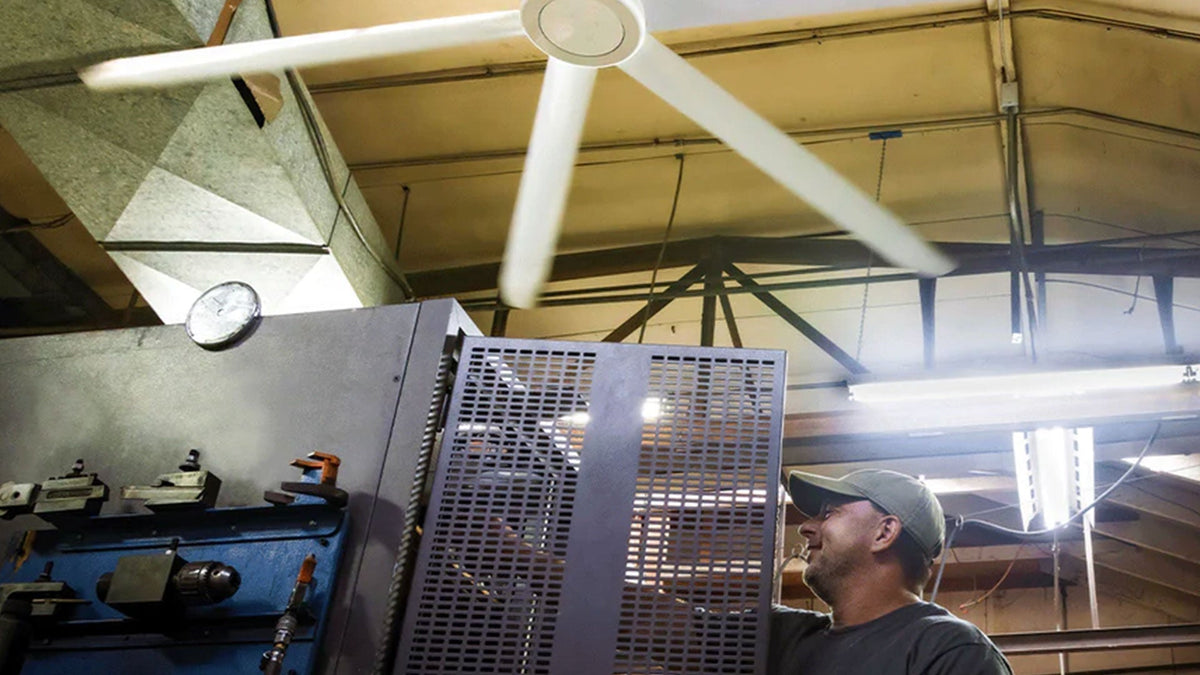
Not every fan is built for the same purpose. A quiet fan that works perfectly in a bedroom may not have nearly enough airflow for a garage, workshop, warehouse, or outdoor patio. Likewise, a powerful industrial fan may be overkill for a small office or living room.
This guide is designed to help a wide range of people choose the right fan based on where it will be used, how much airflow is needed, and what problem needs to be solved.
Homeowners
For homeowners, fans are often about comfort, cooling, airflow, and energy savings. Different rooms in a home have different airflow needs, which means the right fan for one room may not be the right fit for another.
A bedroom may need a quieter pedestal fan, tower fan, or ceiling fan that can run overnight without being disruptive. A living room may benefit from a larger oscillating fan that can move air across a wider area. Garages, basements, attics, and patios usually need more powerful fans because these areas can trap heat and have less natural ventilation.
Many homeowners start by searching online for answers to questions like:
- What is the best fan for a bedroom?
- What is the best fan for a garage?
- What is the best patio fan?
- What is the best fan for a large room?
These are exactly the types of questions this guide will answer.

Contractors and Builders
Contractors and builders often use fans for more than just comfort. On job sites, fans help improve airflow, cool work areas, dry paint and drywall compound, reduce dust, and ventilate enclosed spaces.
A contractor working in an attic may need a compact but powerful fan to reduce heat buildup. A painter may need an air mover fan to help paint dry faster. Construction crews working in garages, workshops, or unfinished buildings may need high-velocity fans that can move large amounts of air quickly.
In these situations, durability matters just as much as airflow. Contractors often need fans that can handle dust, debris, moisture, and daily use.

Business Owners and Facility Managers
Business owners and facility managers often need fans for much larger spaces than homeowners. Warehouses, retail stores, restaurants, gyms, barns, offices, and production facilities all have different airflow challenges.
In a warehouse, the priority may be moving air across a large open area to keep employees cool and comfortable. In a restaurant kitchen, ventilation may be focused on removing heat and smoke. In a gym, large fans can help improve airflow and make the space feel more comfortable during workouts.
Business owners are often searching for answers to questions like:
- What is the best fan for a warehouse?
- What is the best fan for a retail store?
- What size fan do I need for a large room?
- How do I improve airflow in a commercial building?
The right fan can improve employee comfort, reduce stuffiness, and even make customers more likely to stay longer in a space.
Retailers and Resellers
Retailers and resellers need to understand how different fan types fit different customer needs. A customer shopping for a bedroom fan is looking for something very different than a customer shopping for a garage, warehouse, or workshop fan.
Knowing the difference between pedestal fans, tower fans, ceiling fans, drum fans, misting fans, wall-mounted fans, and exhaust fans helps retailers guide customers toward the best option.
For example:
- A homeowner may want a quiet oscillating fan for a bedroom.
- A contractor may need a rugged air mover for a job site.
- A warehouse manager may need a large drum fan for industrial airflow.
- A restaurant owner may want misting fans for an outdoor patio.
Understanding these differences helps retailers make better recommendations and create a better customer experience.
DIYers and Hobbyists
DIYers and hobbyists often need fans for personal spaces like workshops, garages, sheds, greenhouses, patios, and home gyms.
Someone building furniture in a woodworking shop may need a fan to improve airflow and reduce dust buildup. A person setting up a home gym may want a powerful floor fan to keep the room cool during workouts. Someone spending time in a garage or outdoor patio may need a heavy-duty fan or misting fan to stay comfortable in warmer weather.
These users often want fans that are portable, affordable, durable, and easy to move from one space to another.
What Is the Best Fan for Different Spaces?
Below are direct answers to the most common space-specific questions buyers ask.
What Is the Best Fan for a Bedroom?
For a bedroom, the best type of fan is usually a quiet ceiling fan, tower fan, or pedestal fan that can run overnight without being disruptive. Bedrooms generally work well with fans rated under 40 dB at lower speeds. A 44- to 56-inch ceiling fan is appropriate for most bedrooms, while tower and pedestal fans offer more portability for smaller rooms or apartments. The U.S Department of Energy notes that ceiling fans allow homeowners to raise the thermostat about 4°F without sacrificing comfort, making them an energy-efficient choice for bedrooms.
What Is the Best Fan for a Large Room?
For a large room over 400 square feet, a ceiling fan with a 56-inch or larger blade span is recommended, or multiple smaller fans working together. Open-concept living rooms, basements, and great rooms may require fans rated for 4,000 CFM or more to keep air moving evenly across the entire space. Larger rooms with high ceilings often benefit from oversized fans running at lower speeds, which delivers more comfortable airflow with less noise.
What Is the Best Fan for a Workshop?
The best fan for a workshop is typically a heavy-duty wall-mount fan, drum fan, or pedestal fan with a totally enclosed motor that resists dust. Workshops generate heat, dust, and sometimes fumes, so airflow needs are similar to a commercial garage at 3,000 to 6,000 CFM minimum. Wall-mounted fans are popular in workshops because they stay above the dust line and do not take up valuable floor space.
What Is the Best Fan for an Outdoor Patio?
For an outdoor patio, the best fan is a damp- or wet-rated outdoor ceiling fan, misting fan, or weather-resistant pedestal fan. Covered patios generally need damp-rated fans, while open patios, pergolas, and pool areas require wet-rated fans built for direct rain exposure. Misting fans add extra cooling for outdoor dining areas and entertaining spaces in hot climates.
What Is the Best Fan for a Warehouse?
The best fan for a warehouse is usually an HVLS (high-volume, low-speed) ceiling fan or heavy-duty drum fan rated for large open spaces. A single HVLS ceiling fan can cover up to roughly 4,300 square feet, with larger facilities using multiple fans in a grid pattern to maintain even airflow. Drum fans and high-velocity wall-mount fans add focused airflow at packing stations and workstations where employees spend the most time.
No Matter Your Space, There Is a Fan for It
Whether you are choosing the best fans for cooling a home, a job site, a commercial space, or a workshop, the right fan depends on the space and the job.