
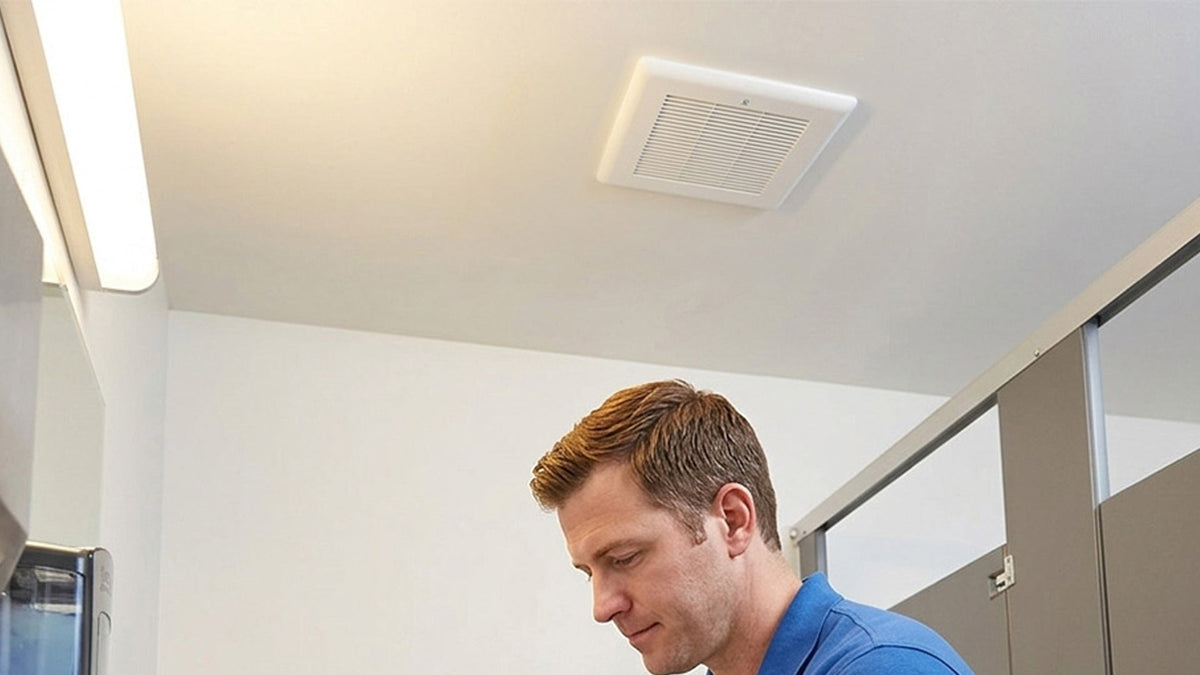
Poor ventilation can make a room feel stuffy, humid, hot, stale, or uncomfortable. In some cases, it can also lead to moisture damage, lingering odors, mold growth, and poor indoor air quality.
Knowing how to ventilate a room is one of the simplest and most affordable upgrades you can make to any home, garage, workshop, or commercial space.
The good news is that most ventilation problems can be improved with the right combination of airflow, fan placement, and ventilation strategy.
What Are the Signs of Poor Ventilation in a House?
Recognizing the signs of poor ventilation in a house early makes them easier to address. The most common indicators are listed below.
Common signs of poor ventilation include:
- Condensation on windows
- Musty smells
- Rooms that feel hot or stuffy
- Mold or mildew growth
- Excess dust
- Smoke, cooking odors, or pet smells that linger
- Bathrooms that stay humid long after a shower
- Bedrooms that feel stale overnight

How to Improve Ventilation in a Room
To improve ventilation in a room, the most effective approaches are opening windows for cross ventilation, using portable or installed fans to circulate air, running exhaust fans to remove stale or humid air, and keeping interior doors open to allow airflow between spaces. The right combination depends on the room's size, layout, and whether it has access to natural airflow.
One of the most common questions people ask is, “How do I improve ventilation in a room?” In many cases, improving ventilation is as simple as creating more airflow.
Opening windows and doors on opposite sides of a room creates cross ventilation, which helps fresh air move through the space. Even opening windows for a few minutes each day can make a noticeable difference.
Portable fans can also help move stale air out and pull fresh air in. Positioning a fan near a window blowing outward can help push hot or stale air outside while drawing cleaner air in from other openings.
For rooms that do not have windows or natural airflow, fans become even more important. Exhaust fans, air circulators, and portable floor fans can all help improve comfort and airflow.
What Do I Do If My Room Has Poor Ventilation?
If your room has poor ventilation, start with the simplest fix first: open windows when weather allows and run a fan to move air through the space. If the room has no windows, install or run an exhaust fan that vents to the outside. Keep interior doors open to allow airflow between rooms, clean any blocked HVAC vents, and consider adding a portable air circulator or dehumidifier if humidity is part of the problem. The EPA's guide to indoor air quality recommends increasing ventilation as one of three core strategies for improving air quality at home.
 How to Improve Ventilation in House (Room by Room)
Different spaces have different ventilation challenges. How to ventilate a garage requires a different approach than how to ventilate a basement, kitchen, or bedroom, because each space has its own combination of moisture, heat, and airflow problems.
Bedrooms
Bedrooms often become stuffy overnight because windows and doors stay closed for long periods of time. A ceiling fan, or pedestal fan can help keep air moving and make the room feel cooler and fresher.
Bathrooms
Bathrooms are one of the most common places for ventilation problems because they collect moisture quickly. Without proper ventilation, steam from showers can lead to mold, mildew, peeling paint, and lingering humidity. Bathroom fans are especially important in bathrooms.
Kitchens
Kitchens create heat, smoke, moisture, and cooking odors. Range hoods, exhaust fans, and portable fans can help improve air circulation and reduce lingering smells.
Garages and Workshops
Garages and workshops often trap heat and dust, especially in warmer climates. High velocity fans, drum fans, and wall-mounted fans can help improve airflow and make these spaces more comfortable.
Basements
Basements often struggle with stale air, dampness, and humidity. Fans combined with dehumidifiers can help improve airflow and reduce moisture.
How Do You Ventilate a Room Without Windows?
To ventilate a room without windows, install or run an exhaust fan that vents to the outside, use a portable fan or air circulator to keep air moving inside the space, and keep interior doors open so air can flow in from adjacent rooms. HVAC systems with adjustable supply and return vents can also help, especially when air filters are clean and dampers are properly set. In some cases, adding a small ductless ventilation unit may be the only practical solution.
Rooms without windows can be some of the hardest spaces to ventilate. Interior offices, storage rooms, bathrooms, laundry rooms, and basements often have little or no natural airflow.
In these cases, mechanical ventilation becomes important. Exhaust fans can remove stale air, while portable fans and air circulators help keep air moving within the room. In some cases, adding vents or improving HVAC airflow may also help.
What Is the Cheapest Way to Ventilate a Room?
The cheapest way to ventilate a room is to open windows and doors for cross ventilation, which costs nothing and works whenever weather and outdoor air quality allow. Beyond that, running a portable fan, using existing bathroom and kitchen exhaust fans, and keeping interior doors open are all very low-cost ways to improve airflow without buying new equipment. Using fans in combination with natural ventilation is one of the most cost-effective ways to improve comfort and reduce HVAC costs.
Improving ventilation does not always require expensive upgrades.
Some of the simplest and most affordable ways to improve airflow include:
- Opening windows regularly
- Using portable fans
- Keeping interior doors open
- Running bathroom and kitchen exhaust fans
- Cleaning HVAC vents and filters
- Using a dehumidifier in damp spaces
- Rearranging furniture that blocks vents or airflow
These small changes can often make a noticeable difference in comfort and air quality.
Ventilation Problems Are Easier to Solve Than Most People Think
Most ventilation problems can be improved with simple changes like adding a fan, opening windows, improving exhaust, or increasing airflow.