
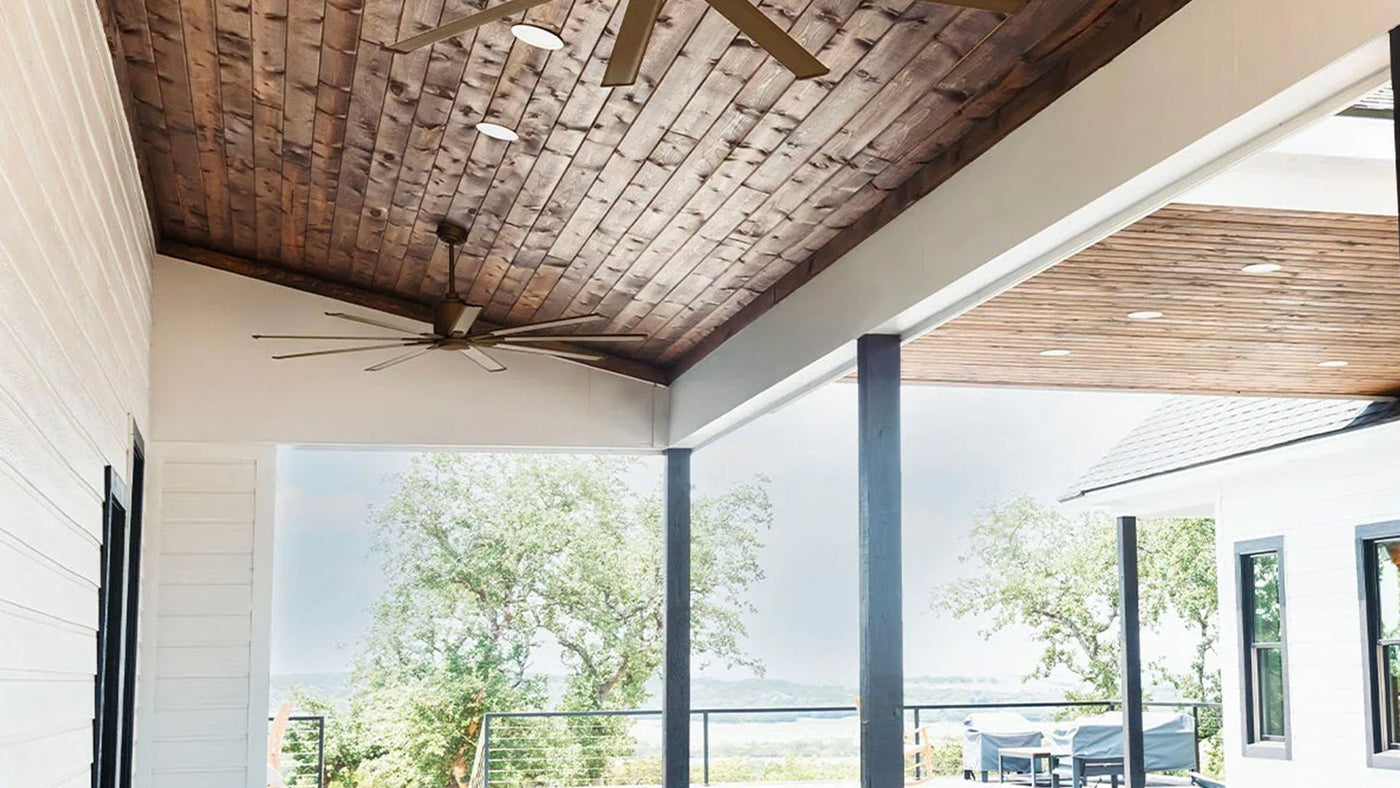
A fan does more than move air. In most rooms, it is one of the largest objects mounted to the ceiling, which means it has a real impact on how a space looks and feels. The right fan can complement a room. The wrong one can dominate it.
Aesthetics matter most for residential and commercial spaces where the fan is in full view. For garages, workshops, warehouses, and barns, performance and durability usually outweigh style. But for living rooms, bedrooms, kitchens, dining rooms, restaurants, retail stores, and covered patios, choosing a fan that fits the design of the space is part of the decision.

Why Fan Aesthetics Matter
Ceiling fans are visible from almost every angle in a room. Floor and pedestal fans take up floor space. Wall-mount fans can become focal points. Because fans are so visible, they influence how a space reads.
A modern minimalist living room can be undermined by a heavy traditional fan with ornate blades. A rustic farmhouse kitchen can feel out of balance with a glossy chrome fan that belongs in a contemporary loft. Matching the fan to the style of the room helps the whole space feel intentional.
Fan aesthetics also affect resale value. Real estate listings often highlight ceiling fans as a selling point, especially in larger rooms, outdoor spaces, and bedrooms. Outdated, mismatched, or worn fans can leave a negative impression even when the rest of the room looks great.
Do Ceiling Fans Add Value to a Home?
Yes, ceiling fans can add value to a home, especially when installed in main living spaces, primary bedrooms, and covered outdoor areas. Real estate agents often note that homes with ceiling fans in bedrooms and living rooms tend to show better and sell faster than comparable homes without them, particularly in warmer climates where buyers expect cooling features as standard. The value impact is highest when the fans are modern, properly sized for the room, and visually integrated into the room's design. Outdated, mismatched, or worn ceiling fans can have the opposite effect, lowering perceived home quality even in otherwise well-maintained spaces. For sellers, replacing an old ceiling fan with a current style is one of the lowest-cost updates with visible visual impact.
Popular Ceiling Fan Styles
There are several broad style categories that cover most of what people are shopping for today.
Modern
Modern fans tend to use clean lines, simple geometric shapes, and minimal ornamentation. Blades are often slim, in either light or dark finishes, and the motor housing is typically compact and rounded or flat.
A modern ceiling fan in this style typically uses matte finishes, slim blades, and a compact motor housing that emphasizes clean form as much as airflow function.
Common finishes include matte black, brushed nickel, white, and gloss gray. Modern fans often pair well with contemporary furniture, neutral color palettes, and open-concept floor plans.
Industrial
Industrial fans embrace exposed metal, mechanical details, and a heavier, more rugged appearance. Cage-style guards, visible screws, and steel finishes are common. Blade designs may be wider, often with a metal or wood-look face.
An industrial ceiling fan brings exposed metal and mechanical detailing into spaces with high ceilings or open floor plans, while a modern industrial fan softens the rugged look with cleaner lines and matte finishes that fit residential interiors.
Industrial style fans fit well in lofts, converted warehouses, restaurants with exposed brick, breweries, gyms, and modern farmhouse spaces that lean industrial.
Farmhouse and Rustic
Farmhouse fans typically feature wood or wood-look blades, often in weathered finishes like reclaimed barnwood, cedar, or distressed white. Motor housings may be matte black, oil-rubbed bronze, or galvanized.
A farmhouse ceiling fan paired with shiplap walls, exposed beams, or distressed wood furniture is one of the most popular combinations in current residential design.
This style works in kitchens, dining rooms, screened porches, and bedrooms designed in farmhouse, rustic, or transitional themes.

Traditional
Traditional fans use classic shapes, ornate detailing, and warm metallic finishes like brass, oil-rubbed bronze, or antique copper. Blades are often dark wood with curved or scalloped edges.
Traditional fans suit formal dining rooms, libraries, master bedrooms, and homes with classic or transitional architecture.
Transitional
Transitional fans bridge modern and traditional. They use simple shapes with slight detailing, neutral finishes, and balanced proportions. This is one of the most flexible styles and fits a wide range of homes.
Outdoor and Tropical
Outdoor fans are often built for damp or wet conditions and may use ABS plastic blades, palm-leaf shaped blades, or weather-resistant wood-look finishes. Tropical styles bring a relaxed, resort feeling to covered patios, sunrooms, and outdoor dining areas.
An outdoor ceiling fan must be damp- or wet-rated depending on the level of exposure, with finish and blade design adapted to handle moisture, salt air, or direct sunlight without fading or corroding.
Minimalist and Bladeless
Minimalist fans focus on hidden mechanics, slim profiles, and visually quiet design. A minimalist ceiling fan keeps mechanical components hidden inside a slim housing and uses neutral finishes that recede into the ceiling rather than dominating the room. Bladeless fans, while not always the most powerful, fit modern interiors where a traditional fan would feel out of place.
What Is the Most Popular Ceiling Fan Style?
The most popular ceiling fan styles today are modern and farmhouse, with industrial and transitional close behind. Modern ceiling fans dominate new construction and contemporary remodels because their clean lines and matte finishes match current interior design trends. Farmhouse ceiling fans have grown rapidly in popularity over the past several years, especially in suburban homes leaning into rustic and cottage aesthetics. Industrial fans, originally popular in commercial spaces, have moved into residential settings as exposed-metal interiors became mainstream. Traditional styles remain steady in homes with classic architecture but have lost market share to transitional designs that work across more interior styles.
What Is the Latest Ceiling Fan Trend?
The latest ceiling fan trends include smart ceiling fans with app and voice control through platforms like Alexa, Google Home, and Apple HomeKit, matte black and bronze finishes replacing brushed nickel as the most-requested colors, larger blade spans of 60 inches or more becoming popular in residential great rooms, and integrated LED lighting with adjustable color temperatures from warm white to daylight. Designer ceiling fans increasingly feature DC motors, which run quieter and use less energy than traditional AC-motor fans while delivering the same airflow. ENERGY STAR certified ceiling fans often use DC motors specifically because they meet the program's stricter efficiency requirements.

Choosing the Right Finish
Finish is one of the most important visual decisions when choosing a fan. The right finish can tie a room together, while the wrong one can clash with cabinetry, hardware, lighting, or furniture.
Common ceiling fan finishes include:
- Matte black
- Brushed nickel
- Oil-rubbed bronze
- Brass and antique brass
- Chrome and polished nickel
- White and gloss white
- Weathered gray
- Wood and wood-look tones
For most rooms, the fan finish should coordinate with light fixtures, cabinet hardware, and other prominent metal accents. It does not have to match exactly, but contrasting finishes that fight one another can make a room feel disjointed.
|
Room Style |
Common Finishes |
|---|---|
|
Modern |
Matte black, brushed nickel, white |
|
Industrial |
Black, gunmetal, raw steel, weathered finishes |
|
Farmhouse |
Oil-rubbed bronze, matte black, weathered wood |
|
Traditional |
Antique brass, oil-rubbed bronze, dark wood |
|
Coastal |
White, brushed nickel, distressed wood |
|
Tropical |
Wood, palm leaf, weathered tones |
What Color Ceiling Fan Is Best?
The best color ceiling fan is the one that coordinates with the room's other prominent metals and key surfaces. Matte black is currently the most versatile single choice because it works across modern, industrial, farmhouse, and contemporary spaces without clashing. Brushed nickel and white remain strong options for transitional and traditional rooms where matte black would feel too bold. For rooms with mixed metals already in use, choose a fan finish that picks up one of the existing tones rather than introducing a fourth metal that competes for attention. In rooms with strong wood elements, a wood-tone or oil-rubbed bronze fan often coordinates more naturally than any metallic finish.
Are Black Ceiling Fans in Style?
Yes, black ceiling fans are very much in style right now, particularly matte black finishes that pair with current interior design trends. A black ceiling fan works in modern, industrial, farmhouse, and contemporary spaces, making it one of the most versatile finish options available today. Matte black has practical advantages too: it hides dust and fingerprints better than chrome or polished nickel, which is part of why it has become so popular in kitchens, bedrooms, and dining rooms where the fan gets daily visual attention. Glossy black finishes have a more dramatic, formal feel and work well in spaces with high ceilings or contemporary lighting, though they show dust more readily than matte versions.
Blade Designs and Materials
Blade design affects both airflow and appearance.
Common blade materials include:
- Wood and plywood with veneer finishes
- ABS plastic for moisture resistance
- Metal blades for industrial or modern designs
- Composite materials that mimic the look of natural wood
Wider blades often move more air at lower speeds and can give a fan a more substantial visual presence. Narrower blades typically suit modern or minimalist designs but may need to spin faster to move the same amount of air.
Blade count also influences appearance. Three-blade fans tend to look more modern and aerodynamic, while four-, five-, and six-blade fans often appear more traditional.
Lighting Integration
Many ceiling fans now include integrated LED lighting. This is especially common in larger rooms where overhead light is part of the original room design.
When choosing a fan with light kit:
- Match the light color temperature to the room (warm white for living spaces, cool white for kitchens and workspaces)
- Look for dimmable options if mood lighting matters
- Consider the brightness level (lumens) relative to room size
- Make sure the light fixture style fits the rest of the room
For rooms where overhead light is not needed, fans without lights often look cleaner and more streamlined.

Matching Fans to Decor
A few simple guidelines can help align fan choice with the rest of a room:
- Match the fan finish to other prominent metals in the space
- Match blade tone to the floor, ceiling beams, or large furniture pieces
- Choose blade count that fits the visual scale of the room
- Use the fan to reinforce the room's existing style rather than introducing a new one
- For open-concept spaces, keep fan styles consistent between connected rooms
Outdoor spaces often benefit from coordinating the fan with the exterior of the home, the trim color, or any outdoor lighting fixtures.
Should a Ceiling Fan Match the Floor or the Room?
A ceiling fan should match the overall room style first, then coordinate with either the floor or the ceiling depending on which feature is more visually prominent. In rooms with dark wood floors, a fan with wood-tone blades can echo the flooring without matching exactly, creating visual rhythm from floor to ceiling. In rooms with white or light ceilings, a white or light-finish fan can blend into the ceiling for a less visually heavy presence, which works well when the fan is large or the ceiling is low. For rooms where the ceiling fan is meant to be a design feature, a contrasting finish like matte black against a white ceiling creates intentional visual interest rather than blending in.
Aesthetics in Commercial and Industrial Spaces
While performance is the priority in warehouses, gyms, factories, and workshops, fan appearance still matters in retail stores, restaurants, fitness studios, and hospitality spaces.
For retail and restaurant interiors, large drum fans and HVLS fans can become design features rather than just airflow tools. Many commercial spaces choose black, white, or branded color finishes that match the rest of the interior design.
For gyms and fitness studios, larger fans often serve as both functional and visual anchors. A well-placed HVLS fan can fit naturally into modern industrial or open warehouse-style designs.
Style Trends Change. Performance Does Not.
Fan styles will continue to evolve, but airflow, durability, and proper sizing remain constant. The most successful fan choice is usually one that fits both the visual and functional needs of the space.
The best looking ceiling fan in any room is usually the one that fits the room's existing design without drawing attention to itself, while still delivering the airflow the space needs.
A beautiful fan that does not move enough air will frustrate the people in the room. A powerful fan that clashes with the rest of the decor may always feel out of place. The best decisions balance both.